

This time, we want to talk about the leading countries in e- commerce. As we know, online shopping has been steadily increasing, and therefore it's no surprise that some countries stand out above the rest thanks to their share of digital sales , the maturity of their logistics, their mobile penetration, and the consolidation of global marketplaces.
China

United States

United Kingdom
Although it ranks third on this list, the UK still lags significantly behind the United States. Despite this, the UK boasts one of the highest percentages of online sales relative to total retail, with digitally savvy consumers and retailers like Amazon UK and eBay UK driving the supply.

Japan
Ecommerce sales in Japan are driven by the online retail giant Rakuten , which is not only one of the largest in the country but also in the world. Interestingly, it offers services in other areas such as banking, travel, and brokerage , creating an ecosystem that fosters customer loyalty and accelerates digital adoption.
Germany,
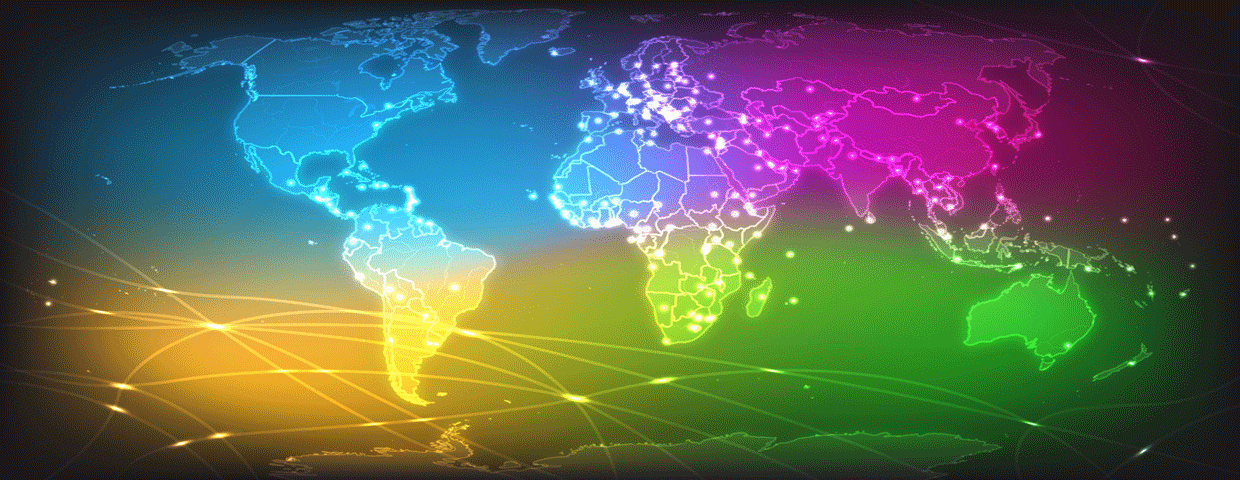
Map of leading countries by e-commerce weight
The following countries stand out in terms of online sales share of total retail sales , with China leading the way and a very strong group in Europe and Asia:
- China (~50%).
- United Kingdom (~30%). South Korea (~27%).
- Indonesia (~26%). Greece (~23%).
- Norway (~20%). Finland (~17%). Denmark (~17%). Lithuania (~17%).
- United States (~16%). Mexico (~16%). Poland (~15%). Japan (~14%). Argentina (~12%). Singapore (~12%).
Globally, e-commerce already represents around one-fifth of retail and the VBM (gross merchandise value) is in the range of 6 to 8 trillion USD , with a path of sustained growth and acceleration in markets such as Brazil, Argentina and Turkey.
The trend-setting e-commerce giants
Amazon maintains its global dominance and strengthens its offering with low prices , its own logistics, and a powerful technology business. JD.com continues its upward trajectory with logistics investment and warehouse expansion in Europe, while Alibaba (AliExpress, Miravia) consolidates its ecosystem despite a more regulated environment in the West.
Walmart becomes a digital giant thanks to its omnichannel and marketplace strategy ; Temu gains traction by relying on a price-driven model and a focus on local offerings in key markets; Shein adjusts its growth amid new regulations and scrutiny . In Europe, Otto Group advances its restructuring, Zalando accelerates with strategic corporate transactions , and Asos optimizes its profitability.
In Latin America, Mercado Libre leads with an integrated ecosystem (payments, logistics, credit). Rounding out the landscape are Rakuten (Japan), eBay (a pioneer in auctions and recommerce), Shopify (infrastructure for millions of stores), and Apple with a robust D2C model . Recent changes have displaced operators like eBay and Veepee from some volume rankings.
Trends: Devices, Payments, Conversion, and Shopping Cart
The global average conversion rate is around 2.1%. Health and beauty (around 3.3%), food and beverages (around 3%), and footwear (around 2.7%) stand out. On desktop and tablet devices, conversion rates are typically around 3-4% , while on mobile they are close to 2% . Sectors such as pharmacy and food delivery show high conversion rates on apps.
The abandoned shopping cart rate is structural: luxury (~88%), mobile operators (~91%), airlines (~90%), luxury (~88%), and fashion (~88%). The highest average order value is seen in jewelry (~€1.200), travel (~€642), and electronics (~€332). More pages are visited per session in groceries (~31), fashion (~26), and health/beauty (~25).
In traffic, eating y fashion receive a large volume from mobile (>80%), while education. maintains more weight on the desktop. By number of stores, they stand out United Kingdom (~700.000), Germany, (~406.000) and France (~270.000), with Spain around 135.000 active projects. The sector that sells the most online is fashionFollowed by entertainment and leisure, beauty, technology y ; among the most frequent products: with , creative writing, The music, computers, decor, clothing, footwear, jewelry, beauty y Alimentation and drinks.
The leadership of China and the United States coexists with highly digital markets in Europe and Asia; at the same time, large marketplaces and digital native operators are consolidating the supply, while trends such as omnichannel , D2C , mobile payments and accelerated logistics are establishing new rules of the game to compete and grow.
