

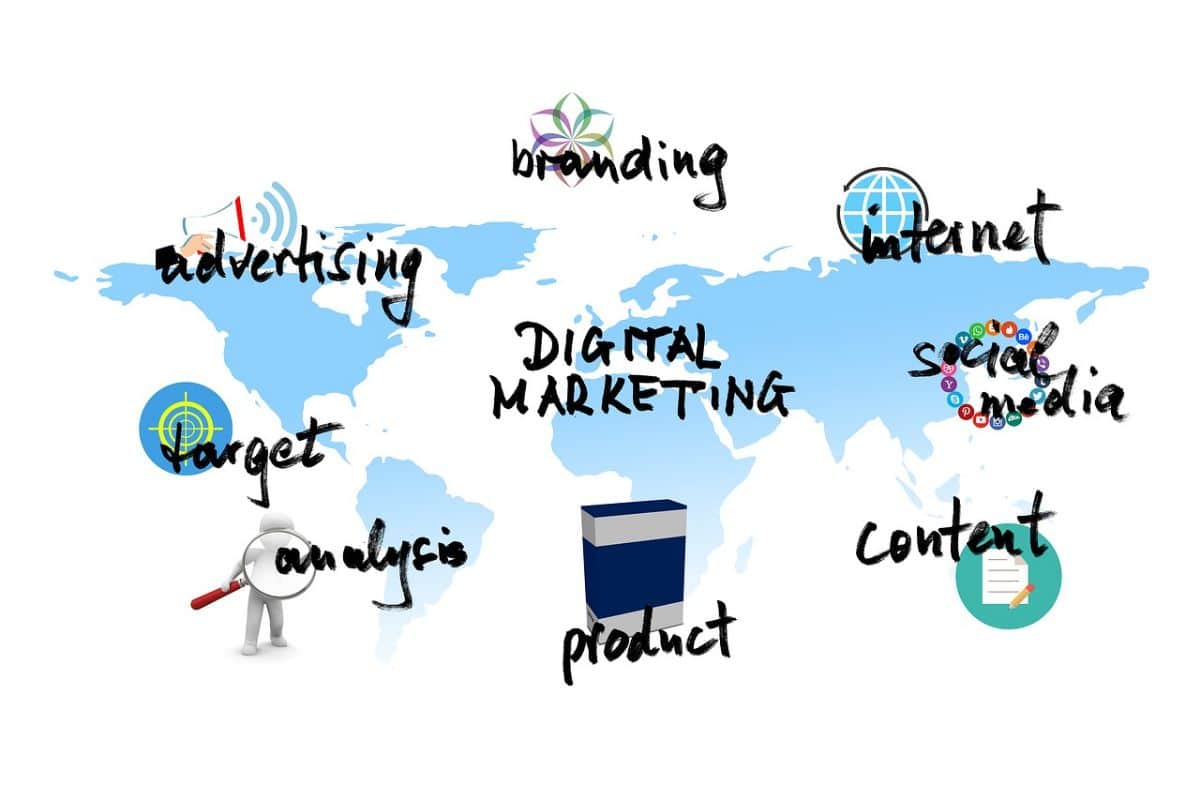
In this highly digital age, an online marketing strategy can help you acquire a large number of potential customers . For this to happen, there are key components in an online marketing strategy that are simply essential. Furthermore, when these elements are integrated in an omnichannel and data-driven way , the customer experience becomes seamless and your investment is more efficient.
Key elements of an online marketing strategy

Website design
Because your online store's web design represents the face of your company , it must be as professional, clean, and user-friendly as possible for everyone who visits the site. In e-commerce web design, don't forget calls to action , site optimization for all browsers, and, of course, keyword integration.
Prioritize an intuitive user experience with clear navigation, logical information architecture, and a frictionless checkout process. Loading speed and a mobile-first approach impact conversion and technical SEO (Core Web Vitals, indexing, structured data).
It includes A/B testing of CTAs , forms, and layouts to improve conversion rates (CRO). It considers accessibility (contrast, ARIA style) and security (HTTPS, trust seals) along with a privacy-compliant cookie consent banner.
Create a blog
For an online store, a blog is essential as an advertising and informational platform that also generates significant traffic to your e-commerce site. When creating your e-commerce blog, be sure to offer RSS and email subscription options , social media sharing buttons, and the ability to interact with customers through comments.
Define buyer personas and an editorial calendar that addresses real customer questions throughout their entire lifecycle (discovery, consideration, decision, and loyalty). Combine articles, guides, videos, and infographics , and organize content into thematic clusters with internal links to enhance authority.
Optimize each piece with relevant keywords , compelling metadata, and clear headings. Close with helpful CTAs (downloads, newsletters) and track views, time on page, and assisted conversions.
Search engine optimization (SEO)
Many customers start their search on search engines when they need something you sell . Therefore, you should use search engine optimization (SEO) techniques to help your e-commerce site stand out in search engine results.
Work on your on-page SEO (search intent, quality content , internal linking), technical SEO (crawling, canonical tags, sitemaps), and off-page SEO (mentions and quality backlinks ). Improve rich snippets with structured data and don't forget to optimize images and video to attract more traffic.
Email marketing
Nor should we lose sight of email marketing , in this case with the creation of a quality design for the email template that provides relevant and useful information to attract potential customers.
Segment by interests and behavior, apply automations (welcome, abandoned carts, post-purchase), personalize subject lines and content, and run A/B tests . Monitor deliverability , open rate, CTR, and conversions to adjust frequency and messaging.
Presence in social networks
Finally, it's also essential to ensure your e-commerce business has a presence on social media platforms like Facebook, Twitter (formerly X), Instagram, LinkedIn, YouTube, and TikTok. This helps you build a community around your online store, reach more people, and stay top of mind.
Adopt a multichannel strategy with consistent messaging , active social listening, and agile response. Alternate formats (reels, live streams, carousels) and combine organic reach with targeted advertising . Use UTM parameters for attribution and measure reach, engagement, clicks, and conversions.
PPC and SEM Advertising
Complement your SEO with paid search engine and social media ad campaigns. Define match types and audiences , align ads and landing pages, and run continuous creative and bidding experiments . Monitor CPC, CTR, CPA, and ROAS to scale what works.
Omnichannel strategy and CRM
The customer is cross-channel and always connected ; integrating web, email, social media, chat, physical store, and support with a CRM that unifies data and activates automations . It ensures consistent messaging and continuity across channels to increase customer satisfaction and lifetime value.
Continuous analytics and optimization
Before investing, clarify your objectives and KPIs. The 5 key questions every strategy should answer: 1) objectives, 2) data to track and tools, 3) channels, 4) responsible parties and frequency of analysis, 5) how to optimize to maximize ROI.
Measure CTR, CPC , CPA , conversion rate, bounce rate, and exits per page. Identify bottlenecks and implement changes to content, UX, or value proposition. Transform big data into actionable insights with dashboards and regular reviews.
Customer loyalty and marketing
Your existing customer base is a source of consistent revenue . Create loyalty programs (points, coupons, early access), develop communities , and solicit feedback. Implement referral programs with clear incentives and simple workflows to convert customers into advocates.
Social media interaction shouldn't be solely promotional; provide value and support without expecting anything in return to position yourself as a leader. Listen to and act on feedback to strengthen loyalty.