

Facebook has established itself as the undisputed giant of social media globally, surpassing 3.000 billion active users. This figure demonstrates that if there is one social network that reigns supreme in terms of reach and user base, it is undoubtedly Facebook. In Spain specifically, the number of users is estimated to be massive, exceeding 20 million people who use the platform for various purposes.
Facebook, besides being the dominant social network today, is also one of the most controversial . This is due both to its unilateral and, at times, disrespectful approach to users, and to the sensitive issue of respecting and protecting the privacy of personal data that users entrust to the platform. Despite these criticisms, its ability to adapt keeps it at the top.
Facebook is a platform that also likes to acquire smaller ones , as was the emblematic case of its purchase of Instagram. With this move, Facebook is trying to create operational and commercial synergies between the two, so it's very likely that it will continue trying to exploit potential synergies with other existing social networks in the near future.

Facebook's acquisition of Instagram represents a pivotal strategic move, as Instagram dominates the realm of glamour and visual impact. It's not just a fashion network; it has transformed into a massive revenue stream, allowing many Instagrammers to turn their activity into a professional livelihood. Due to this boom, professional Instagram courses have emerged , demonstrating that we are facing a social and monetary phenomenon of enormous magnitude that no brand or professional can ignore.
What is Facebook and what is its origin?
To understand the basic workings of the Facebook platform, it's necessary to analyze its essence. It's a social network designed primarily to connect people, allowing them to share information, news, and audiovisual content with friends and family. Currently, it's owned by Meta , the parent company that also owns WhatsApp and Instagram.
The story of Facebook begins in 2004, conceived by Mark Zuckerberg and other Harvard University students, including Andrew McCollum, Eduardo Saverin, Chris Hughes, and Dustin Moskovitz. However, its creation was surrounded by controversy, as the Winklevoss twins and Divya Narendra alleged that Zuckerberg used an idea they had commissioned him to develop for a directory of university fraternities and sororities.
Initially, the network was restricted exclusively to Harvard students. Later, it expanded to other Ivy League universities and Boston University, then opened to high school students, and finally to anyone with an email address. Today, the only essential requirement to create an account is being over 13 years old.

How Facebook works
Facebook works in a very simple way: it's a digital ecosystem that connects people to other people. The moment you open an account, you enter a network that instantly links friends, family, and business associates.

Over time, the platform has evolved to remain relevant. Although initially focused on individuals, businesses and brands have found an unprecedented market opportunity. Advertising investment has shifted from television to the digital environment because that's where the largest audience is concentrated, making having a Facebook page a strategic investment for any business.
The basic functionalities of Facebook are:
- Friend finder: It allows you to easily locate people using first and last names.
- Resource exchange: Ability to share web pages, photos, videos and other multimedia files (subject to platform restrictions).
- Surveys: A tool for gathering community feedback, ideal for quick interactions.
- Creation of groups: Spaces dedicated to common interests.
- States and emotions: Publish current thoughts, feelings, or even mood.
Each user has a "timeline" (formerly known as a "wall" or "biography"), where all activities and posts are recorded. It's possible to adjust the privacy settings to decide who can see the content: everyone, only friends, or specific people.

Organization and Management of Contacts
You can organize your Facebook to share content with specific people or create lists to differentiate your posts. Friends can be organized into specific lists such as:
- Best friends
- Family
- Others
These lists function similarly to Twitter's, allowing for content segmentation. You can also organize your shared content into interest-based lists that your friends can subscribe to. For example, you could create a list dedicated to music, another to work, and one to entertainment, allowing your contacts to follow only the topics that interest them.
Facebook Groups: Virtual Communities

Using Facebook's search engine , you can explore groups on any topic by entering keywords. Once you find a group, you can request to join to exchange advice and experiences with other members. Depending on their settings, there are three types of groups:
- Public/Open Groups: Anyone can join without prior authorization and the content is visible to everyone, even if they are not members.
- Private/Closed Groups: They are visible in the search engine, but to view the content and participate you need to be accepted by the administrators.
- Secret Groups: They do not appear in search results. Access is only possible through a direct invitation from an administrator or current member.
The Impact of Images and Visual Content
The Facebook platform is fundamentally visual. Images allow users to share personal milestones, such as events, shopping trips, or get-togethers with friends. In addition to uploading photos, users can highlight them to ensure greater visibility and permanence by organizing them into personal albums within their timeline.

External Applications and Integrations
Facebook apps are programs developed by third parties that function as extensions to enhance the social network's functionality. There are apps for almost every purpose, including utilities, games, news, and music.
A prime example is Spotify , which, although it has its own standalone app, can integrate with Facebook to share musical interests and discover those of friends. Similarly, Facebook authentication has become a standard convenience, allowing users to create accounts on other websites without managing multiple credentials or completing tedious registration processes.
Purpose and User Privacy
Facebook's purpose is to allow you to share your personal life , acting as an open window into your daily routine. However, managing your reach and exposure is crucial. In Spain, Facebook's penetration rate is extremely high, meaning that if privacy settings and permissions aren't configured correctly, anyone could access sensitive information.
To mitigate security risks, the following is recommended:
- Update privacy options: Define who sees the updates (only friends or contacts of contacts).
- Moderate the wall: Do not allow third parties to post on the profile without prior approval.
- Label control: Configure your network to not appear in photos tagged without permission.
- Login review: Monitor the geolocated connection history to detect unauthorized access.
- User blocking: Prevent unwanted people from sending friend requests or interacting with the account.

Pop Culture and the Movie "The Social Network"
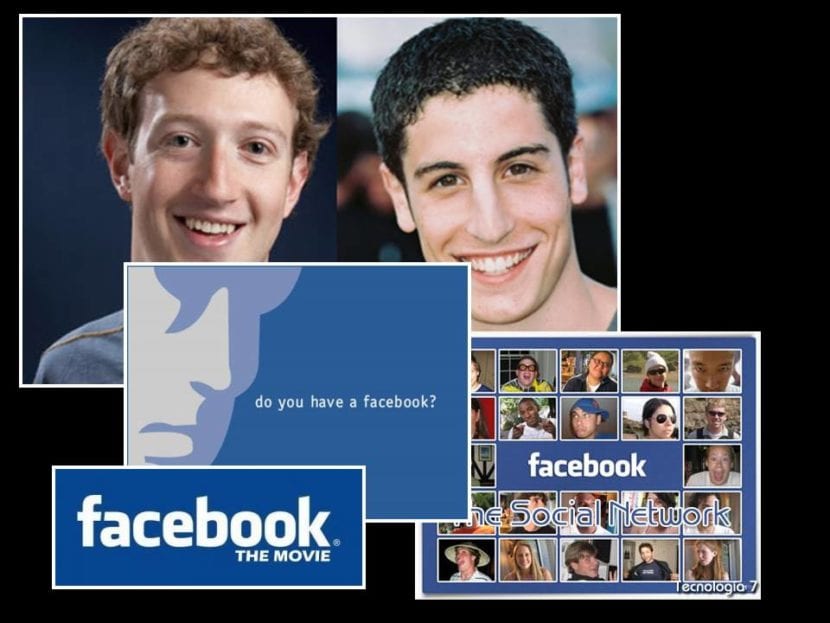
Facebook's impact is so significant that Hollywood produced the film "The Social Network ." It chronicles the platform's evolution from a student project at Harvard to the tech giant it is today, addressing legal disputes and the company's exponential growth.
General Analysis of the Platform
Facebook is a social media platform with an intuitive interface that facilitates the flow of information. Depending on the settings, information can go viral (massive reach) or remain within a small circle of friends. The application allows for the synchronization of mobile contacts, ensuring that the experience is personalized according to the user's interests and the people they follow.
Having good judgment when selecting who to add and which pages to follow makes Facebook not only a place for social interaction, but also for consuming useful and entertaining information.

Facebook Guide for Businesses and Companies
For a business, Facebook is not just a social network, but a powerful digital marketing tool . The key question isn't whether the business should be on Facebook, but whether its target audience is on the platform. If the answer is yes, developing a professional social media strategy is imperative.
Advantages of Facebook for the business sector:
- Direct communication channel: It allows you to establish an immediate connection with customers, improving your online reputation and brand image.
- E-commerce booster: It acts as a source of traffic to online stores and allows direct sales through catalog linking.
- Channel add-on: It helps to position other digital assets such as blogs, YouTube channels or websites by generating links.
- Mobile Optimization: Since the vast majority of users access Facebook from mobile devices, Facebook offers a tailored experience that maximizes interaction.
- Advanced tools: Access to Facebook Ads for targeted advertising, Facebook Marketplace for local sales and Facebook Workplace for internal professional networks.

How to optimize a company's Fan Page
It's essential to differentiate between a personal profile and a Fan Page . Using personal profiles to represent businesses violates the terms of service and limits access to analytics tools. To optimize your corporate presence, we recommend:
- Custom URL: Change the generic address to one that is easy to remember (e.g., facebook.com/yourbusiness).
- Visual Identity: Use professional cover photos (851 x 315 px) and profile photos (180 x 180 px) to build trust and engagement.
- Full Information Section: Fill in the short description so that visitors can quickly understand the company's value proposition.
- Call to Action (CTA) Buttons: Implement buttons such as "Buy", "Contact Us" or "Book" to guide the user towards the conversion goal.
- High Response Badge: Maintain a 90% response rate within an average time of 15 minutes to demonstrate customer service.
- Event Management: Highlight product launches or corporate achievements in the events tab to generate affinity.

Final Considerations on Safety and Ethical Use
To enjoy the platform without problems, it's vital to avoid certain behaviors. Sharing overly personal information (addresses, vacation dates, or sensitive data) is not recommended, as this can expose the user to real risks. Likewise, it's essential to use strong passwords that combine uppercase and lowercase letters, numbers, and special characters to prevent account hacking.
In the professional sphere, it's important to be mindful of the content you post if you're actively seeking employment, as recruiters often review social media profiles. Finally, respect for other users is fundamental to a positive experience; any attempt at intimidation or insults may result in your profile being reported and your account being permanently suspended by Meta.
Facebook has transformed into a multifaceted tool that allows users to do everything from maintaining emotional connections with loved ones to scaling a global business model. Through its ecosystem of profiles, groups, and pages, the social network offers a robust infrastructure for information exchange, provided that users maintain conscious control over their privacy and the quality of their digital interactions.