
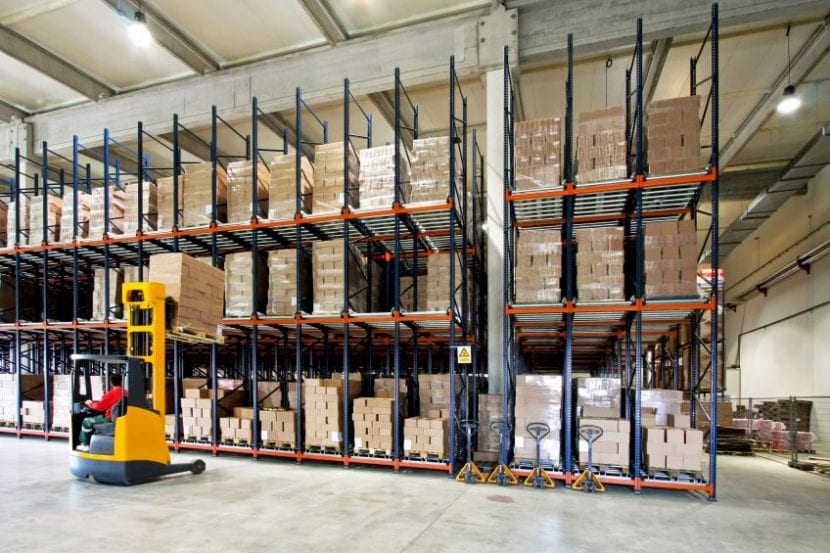
People are spending more and more money making online purchases , and real estate developers , joining this phenomenon, are beginning to invest record amounts in the construction of increasingly larger , taller warehouse spaces that meet the demanding infrastructure expectations of e-commerce, as well as the robots and automated systems that usually help in daily operations.
Construction companies in the United States have spent billions of dollars building warehouses in just a few months, reaching record figures in the logistics sector. October alone saw a record investment of approximately $2.700 billion , the highest monthly figure to date. The average size of warehouses currently under construction is around 50.000 square meters , roughly double the size of those built in 2001. Even ceilings are more than 20% higher than in previous periods (some studies show figures as high as 21% ), with the aim of maximizing vertical space and integrating complex automation solutions.

Why are e-commerce warehouses growing so much?
Retailers with 30.000 items in their physical stores may be selling up to ten times that number of items through their online channels. The greater the inventory available to customers, the larger the warehouse space needs to be, along with higher ceilings to accommodate more shelves and allow operators to manage a greater number of racks within the building without sacrificing efficiency.
The lack of logistics space has become a major concern for operations managers. The rise of e-commerce has led to a severe shortage of logistics land near major cities, driving up the cost per square meter and forcing companies to maximize the use of every warehouse: taller buildings are being constructed, high-density storage systems are being used, and a clear strategy for utilizing vertical space is being adopted.
Furthermore, the standard of 24-hour or less delivery requires companies to bring their distribution centers closer to the end consumer. This has led to the rise of urban microhubs or micro-fulfillment centers: small, automated warehouses strategically located near high-demand areas to prepare numerous orders of a few items in a very short time.
To make all this possible, industrial buildings have had to incorporate much thicker and stronger concrete floors, capable of supporting the heavy machinery used in automation: stacker cranes, conveyors, shuttles, autonomous mobile robots (AMRs), and automated storage and retrieval systems (AS/RS). This allows processes to be managed safely, reliably, and appropriately in the long term.
These are unprecedented changes. The fact that e-commerce is driving the construction of larger, taller, and more automated warehouses is a clear sign that current commerce processes are evolving rapidly, particularly in the online marketplace, where logistics has become a key competitive advantage. This growth is likely to continue until a physical limit is reached in warehouse size; at that point, the widespread adoption of robotic technology and automated solutions will become even more essential to maintaining operational efficiency.
Features of the new warehouses for e-commerce

E-commerce companies typically manage a high volume of orders and returns in the shortest possible time, as service requirements and the intense competition in online commerce demand it. To be truly efficient and achieve total quality , modern warehouses must meet a number of very specific characteristics.
The first is maximum agility and flexibility . Products must be prepared and delivered within very short timeframes, ranging from one or two days to just a few hours for the most demanding services. This necessitates designing extremely fast picking, packing, and shipping processes, with layouts that reduce travel distances, minimize empty movement, and make the most of every available meter.
The second key feature is optimized communication with suppliers . To gain agility and optimize stock space, many operators use the just-in-time system, where some items are not permanently stored and are ordered on demand. This model requires very precise coordination with suppliers to have products available on time without exceeding storage capacity.
Third, speed is essential in all internal processes . The success of an e-commerce warehouse lies in its ability to meet delivery deadlines flawlessly, avoiding shipments to incorrect addresses, wrong items, or damage to merchandise. To achieve this, storage systems that offer direct access to products are combined with specific picking solutions for individual units , such as gravity-fed dynamic picking shelves, elevated aisles, or multi-level mezzanines.
Another key element is the clear commitment to digital transformation and high technology . Automated forklifts, mobile shelving moved by robots, identification via barcodes or RFID, autonomous vehicles, high-performance warehouse management systems (WMS), and data analytics platforms allow for real-time stock control, ensure traceability, and make decisions based on up-to-date information.
Finally, new e-commerce warehouses must integrate ergonomics and safety into their design: good lighting, temperature control, adequate air quality, clear signage, accessible emergency exits, and tools that reduce the physical strain on operators. A safe environment increases productivity, decreases absenteeism, and reduces errors caused by fatigue.
Automation, software, and data analytics in growing warehouses
As warehouses grow, automation becomes essential to maintain efficiency. Systems such as bin AS/RS, goods-to-person solutions, miniloads, and grid-based robots allow for maximizing vertical space, increasing storage density, and reducing order picking times.
At the heart of this automation is a powerful warehouse management system (WMS) that coordinates inventory, picking routes, task assignment, and returns management. A good WMS automates routine processes, generates optimal routes, maintains real-time stock visibility, and integrates with the e-commerce platform, ERP, and transportation systems.
Data analytics and demand forecasting also play a strategic role. Analyzing past sales, seasonality, and trends allows for proper inventory sizing, anticipating activity peaks, and avoiding both overstocking and stockouts. This improves cash flow and reduces capital tied up in inventory.
In parallel, reverse logistics management is becoming increasingly important. Return rates in e-commerce are much higher than in physical stores, so dedicated areas and standardized processes are required to receive, inspect, classify, and restock returned items that can be resold. How this flow is managed has a direct impact on the customer's perception of the service.
This entire set of technologies and procedures translates into warehouses capable of scaling their order volume without losing control or profitability. The result is larger, taller logistics centers, deeply connected to the digital supply chain, enabling e-commerce to continue growing without logistics becoming a bottleneck.
The steady growth of e-commerce warehouses shows that logistics has gone from being a support for online sales to becoming one of its main drivers, and those companies that know how to combine space, automation, data and human talent will be better prepared to compete in an increasingly demanding digital market.